


Ludisia Discolor
🌿 Quick Facts
Scientific Name: Ludisia discolor
Common Name: Jewel Orchid
Plant Type: Tropical orchid grown for ornamental foliage
Native Region: Southeast Asia
Light: Bright, indirect light; avoid direct sun
Watering: Keep soil slightly moist but not soggy
Soil: Loose, well-draining orchid or tropical potting mix
Propagation: Stem cuttings
Ludisia Discolor Care Guide
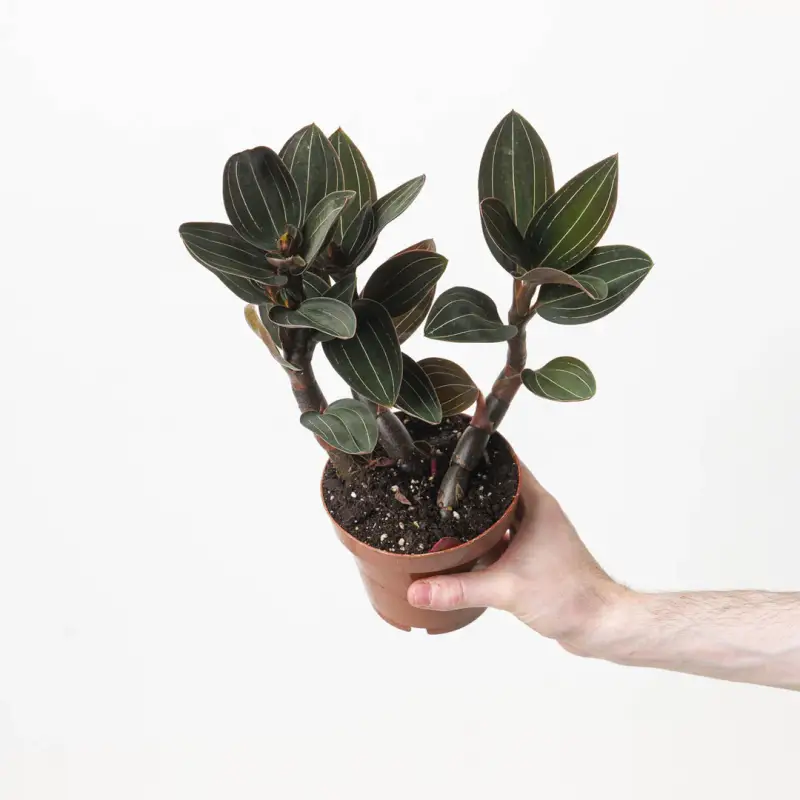
Ludisia discolor, or the Jewel Orchid, is one of the most visually striking indoor orchids because of its deep, velvety leaves and elegant leaf patterns. Unlike many orchids, which are grown for flowers, Ludisia’s foliage is the main attraction, displaying shades of deep green, burgundy, and chocolate with intricate veins of gold or red.
Small, delicate white flowers may appear on spikes during the growing season, adding an extra layer of charm. Compact and slow-growing, this orchid is perfect for small indoor spaces, terrariums, or shaded areas of your home.
🌍 Natural Habitat
Native to the forest floors of Southeast Asia, Ludisia discolor grows in shaded, humid environments with filtered sunlight. The plant naturally thrives in humus-rich soils that retain moisture but are well-draining.
Understanding its natural habitat helps us replicate these conditions indoors: moderate temperatures, consistent humidity, and indirect light are essential for healthy foliage and occasional flowering.


☀️ Light Requirements
Ludisia thrives in bright, indirect light. Avoid direct sunlight, which can scorch the delicate leaves and reduce the intensity of its leaf veins.
Tips for optimal light:
-
Place near an east-facing window for gentle morning light
-
Filter light with a sheer curtain if the plant is near a south-facing window
-
Rotate occasionally to ensure even leaf growth
Insufficient light will cause dull foliage, slower growth, and fewer flowers. Too much direct sun will burn leaves and cause permanent damage.
💧 Watering
The Jewel Orchid prefers evenly moist soil but is susceptible to root rot if overwatered.
Watering tips:
-
Water when the top 1 inch of soil is dry
-
Use room-temperature water
-
Avoid letting water sit in the saucer; drain excess
-
Reduce watering slightly during winter dormancy
Proper watering ensures lush, healthy foliage, while inconsistent moisture can cause leaf yellowing, drooping, or bud drop.

🌱 Soil & Drainage
Use a loose, well-draining tropical or orchid mix. A good combination includes:
-
Peat moss or coco coir for moisture retention
-
Pine bark for aeration
-
Perlite for drainage
Good drainage is critical; overly compact soil can suffocate roots and lead to fungal issues. A slightly acidic pH (5.5–6.5) mimics the forest-floor environment.
🌿 Humidity & Temperature
Jewel Orchids thrive in high humidity (60–80%) and moderate temperatures. Ideal conditions:
-
Temperature: 65–75°F (18–24°C)
-
Humidity: 60–80%
Increase humidity by:
-
Misting leaves with water
-
Using a humidifier nearby
-
Placing on a pebble tray with water
Dry indoor air can lead to brown leaf tips, slowed growth, and reduced flowering.


🌱 Propagation
Ludisia discolor propagates easily via stem cuttings:
-
Select a healthy stem with at least two nodes
-
Cut the stem with a clean, sharp tool
-
Place in moist potting mix or water
-
Cover with a plastic bag or humidity dome to encourage root growth
-
Roots develop within 3–6 weeks in optimal conditions
Propagation is best in spring or early summer, when the plant is actively growing.
🌿 Growth Habit
Jewel Orchids are compact, slow-growing orchids that form rosettes of velvety leaves. The foliage is the star, displaying a jewel-like shine and intricate vein patterns.
Flowers are small, delicate, and white, appearing on spikes that rise above the foliage. With proper care, Ludisia discolor can live for many years as a beautiful indoor ornamental plant.

Thank you for exploring The Botanical Index, a growing botanical library dedicated to organizing plant knowledge. Follow on YouTube and Facebook for new plant care guides and daily plant content.
Add comment
Comments