


Utricularia sandersonii
📌 Quick Facts
- Common Name: Rabbit Ear Bladderwort
- Scientific Name: Utricularia sandersonii
- Plant Type: Carnivorous perennial
- Family: Lentibulariaceae
- Native Range: South Africa
- Light Requirements: Bright, indirect light
- Watering Needs: Constant moisture (distilled or rainwater)
- Humidity: High
- Soil Type: Nutrient-poor, peat-based mix
- Temperature Range: 60–80°F (15–27°C)
- Growth Habit: Low-growing, spreading
- Mature Size: Forms dense mats
- Toxicity: Non-toxic
The Rabbit Ear Bladderwort Complete Care Guide
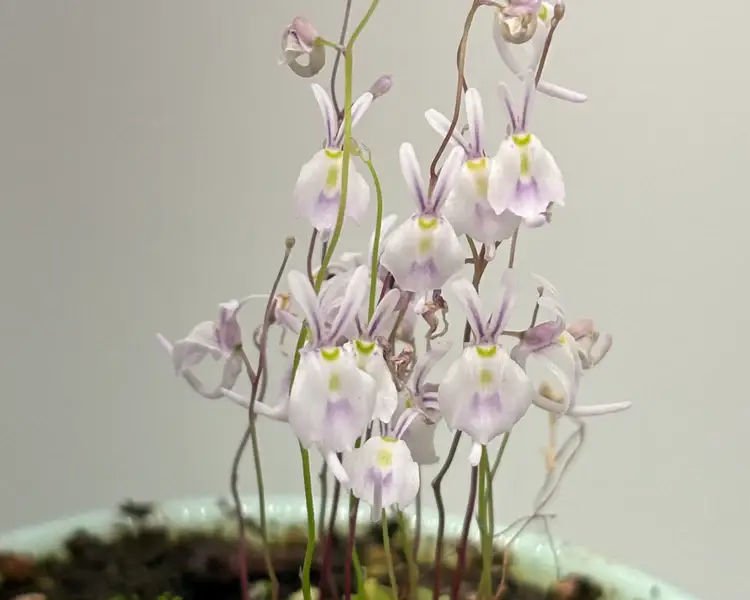
Utricularia sandersonii is a small but fascinating carnivorous plant best known for its delicate, whimsical flowers that resemble tiny rabbit ears. Despite its fragile appearance, this species is highly adaptable and can form dense, moss-like mats over time.
Unlike more well-known carnivorous plants, Utricularia sandersonii captures microscopic prey using tiny bladder traps hidden beneath the soil surface. These traps create a vacuum that pulls in microorganisms, allowing the plant to supplement its nutrient intake in otherwise poor growing conditions.
Its compact size and unique flowering habit make it especially popular for terrariums and controlled indoor environments.
🌍 Native Habitat and Growth Behavior
Utricularia sandersonii is native to South Africa, where it grows in consistently moist, nutrient-poor environments such as bogs, seepage areas, and wet grasslands.
It thrives in soils that are low in nutrients but constantly damp, often spreading across surfaces as a groundcover. Rather than relying on traditional root systems, it uses fine structures to anchor itself while focusing energy on capturing microscopic prey.
This growth habit allows it to colonize areas where other plants may struggle to survive.


☀️ Light Requirements
This plant prefers bright, indirect light. In its natural environment, it grows in open but not harshly exposed areas where it receives filtered sunlight.
Indoors, it performs well under:
- Bright windows with indirect light
- Grow lights (especially in terrarium setups)
Too much direct sunlight can dry out the plant and damage its delicate structure, while too little light may reduce flowering.
Consistent lighting is key to encouraging regular blooms.
🌡️ Temperature Requirements
Utricularia sandersonii thrives in moderate, stable temperatures, ideally between 60–80°F (15–27°C).
It prefers:
- Warm daytime temperatures
- Slightly cooler nighttime conditions
This plant does not tolerate extreme heat or cold well. Temperatures below 50°F (10°C) can slow growth significantly, while excessive heat combined with low humidity can cause stress or dieback.
Because of this, it is best suited for indoor environments where temperature can be controlled.


💧 Watering Needs
Consistent moisture is critical for this plant’s survival. The growing medium should remain constantly damp at all times.
Important watering guidelines:
- Use distilled, rainwater, or reverse osmosis water
- Avoid tap water due to mineral buildup
- Never allow the soil to dry out
Many growers use the tray method, keeping the pot sitting in a shallow layer of water to maintain consistent moisture.
Dry conditions can quickly damage or kill the plant.
🌿 Soil Preferences
Utricularia sandersonii requires a nutrient-poor, moisture-retentive growing medium.
A suitable mix includes:
- Peat moss
- Sand or perlite (for slight aeration)
Avoid standard potting soil, as it contains nutrients that can harm the plant. Its carnivorous nature means it relies on capturing prey rather than absorbing nutrients from soil.
The goal is to replicate bog-like conditions as closely as possible.


🌱 Propagation Methods
This plant is most commonly propagated through division.
To propagate:
- Gently separate a section of the plant mat
- Replant in fresh, moist growing medium
- Maintain high humidity and consistent moisture
It spreads naturally over time, so propagation is often as simple as dividing established growth.
Under ideal conditions, it can expand quickly and fill containers or terrariums.
🌼 Growth Characteristics
Utricularia sandersonii grows as a low, spreading mat that resembles moss. Its most distinctive feature is its small, upright flowers, which bloom above the foliage and resemble tiny rabbit ears.
Flowering can occur frequently when conditions are stable, especially with proper lighting and moisture.
Its underground bladder traps are not visible but play a crucial role in its survival by capturing microscopic organisms.


⚠️ Common Problems and Solutions
Drying Out:
Even brief periods of dryness can cause damage. Keep soil consistently moist at all times.
Using Tap Water:
Minerals can build up and harm the plant. Always use distilled or rainwater.
Low Humidity:
Can slow growth and reduce flowering. Increase humidity with a terrarium or humidity tray.
Too Much Nutrient:
Fertilizers or rich soil can damage the plant. Always use nutrient-poor media.
🌟 Why Grow Utricularia sandersonii?
Utricularia sandersonii offers something truly different from traditional houseplants. Its carnivorous nature, combined with its charming flowers, makes it both a conversation piece and a rewarding plant to grow.
It is especially appealing for:
- Carnivorous plant collectors
- Terrarium enthusiasts
- Growers interested in unique plant adaptations
Despite its exotic nature, it can be surprisingly easy to maintain once its moisture and water quality needs are met.
Utricularia sandersonii is a perfect example of how diverse and unusual the plant world can be. Its ability to thrive in nutrient-poor environments while capturing its own food sets it apart from most other plants.
With consistent moisture, proper lighting, and stable temperatures, it can grow vigorously and produce its signature rabbit-like flowers regularly.
For those looking to explore carnivorous plants beyond the basics, this species is an excellent place to start.
Thank you for taking the time to learn about Utricularia sandersonii. The Botanical Index is a growing plant library built to make plant knowledge more accessible, organized, and easy to understand for enthusiasts of all levels.
New plant profiles are continuously being added as we expand this collection.
🌿 Follow and explore more:
👉 YouTube: https://www.youtube.com/channel/UCOeb57qASa0Mrwg-6xCid2w
👉 Facebook: https://fb.com/thebotanicalindex
💬 Do you currently have a Utricularia sandersonii in your collection, or are you thinking about adding one?
Add comment
Comments