


Vriesea splendens
📌 Quick Facts
Common Name: Flaming Sword Bromeliad
Scientific Name: Vriesea splendens
Plant Type: Tropical epiphytic perennial
Family: Bromeliaceae
Native Range: Northern South America (Venezuela, Suriname, Guyana, Brazil)
Light Requirements: Bright, indirect light
Watering Needs: Moderate; keep central cup filled
Humidity: High humidity preferred
Soil Type: Well-draining, airy bromeliad mix
Temperature Range: 65–80°F (18–27°C)
Growth Habit: Rosette-forming
Mature Size: 12–24 inches tall
Toxicity: Non-toxic to pets
The Flaming Sword Bromeliad Complete Care Guide
Vriesea splendens, commonly known as the Flaming Sword Bromeliad, is a tropical showpiece prized for its bold, sword-shaped flower spike and striking zebra-striped foliage. The plant forms a rosette of arching leaves with dark green and deep maroon banding, giving it visual interest even when not in bloom.
Its vibrant red inflorescence can last for several months, making it a favorite among indoor plant enthusiasts looking for long-lasting color. Unlike many flowering houseplants, this bromeliad is relatively low-maintenance and thrives in indoor environments when given the right conditions.
🌍 Native Habitat and Growth Behavior
In its natural habitat, Vriesea splendens grows as an epiphyte in tropical rainforests, meaning it often attaches itself to trees rather than growing in soil. It thrives in warm, humid environments with filtered sunlight beneath the forest canopy.
The plant collects water and nutrients through its central “tank” or cup formed by its rosette. This adaptation allows it to survive in environments where soil nutrients are limited.


☀️ Light Requirements
Vriesea splendens thrives in bright, indirect light.
Too little light can result in dull foliage and prevent blooming, while direct sunlight can scorch the leaves and fade their vibrant striping.
Indoors, place it near an east- or north-facing window, or slightly back from a brighter south or west window with sheer filtering.
🌡️ Temperature Requirements
This plant prefers temperatures between 65–80°F (18–27°C).
It is sensitive to cold and should not be exposed to temperatures below 50°F (10°C). Sudden temperature drops can stress the plant and impact growth or flowering.
Consistent warmth is key to keeping this bromeliad healthy and thriving.


💧 Watering Needs
Unlike typical houseplants, Vriesea splendens is watered primarily through its central cup.
Keep the cup filled with fresh water and flush it out weekly to prevent stagnation or bacterial buildup.
The soil should be kept lightly moist but never soggy. Allow the top layer to dry slightly between watering's. Over watering the soil can lead to root rot.
🌿 Soil Preferences
This plant requires a loose, well-draining mix that allows airflow around the roots.
A bromeliad or orchid mix works best, often consisting of bark, perlite, and peat or coco coir.
Because it naturally grows on trees, dense potting soil can suffocate the roots and should be avoided.

🌱 Propagation Methods
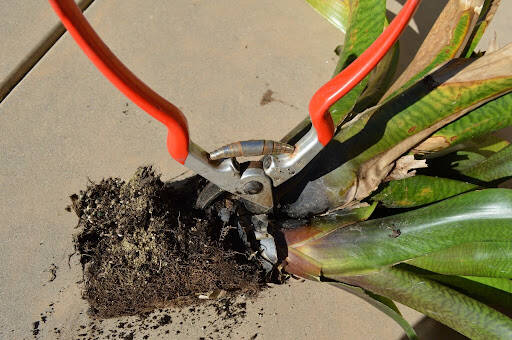
Vriesea splendens propagates through offsets, often called “pups.”
Step-by-step:
- Wait until the pup is about one-third to half the size of the mother plant.
- Gently remove the pup using a clean, sharp tool.
- Allow the cut area to dry for a few hours.
- Plant in a well-draining bromeliad mix.
- Keep in warm, humid conditions with indirect light.
The mother plant will gradually decline after flowering, but pups will continue the life cycle.
🌼 Growth Characteristics
This bromeliad grows in a compact rosette, producing broad, arching leaves with distinctive horizontal striping.
It is a slow-growing plant that typically flowers once in its lifetime, producing a dramatic, flat, sword-like red bloom that can last for several months.
After flowering, energy shifts toward producing pups rather than continued vertical growth.


⚠️ Common Problems and Solutions
Brown Leaf Tips:
Cause: Low humidity or mineral buildup
Solution: Increase humidity and use distilled or filtered water
Root Rot:
Cause: Overwatering soil or poor drainage
Solution: Use a well-draining mix and reduce watering
Fading Leaf Color:
Cause: Too much direct sunlight
Solution: Move to a location with filtered light
No Blooming:
Cause: Insufficient light or maturity
Solution: Increase light exposure and ensure the plant is mature
🌟 Why Grow Flaming Sword Bromeliad?
Vriesea splendens is perfect for plant lovers seeking a bold, tropical centerpiece without demanding care requirements.
Its long-lasting bloom, striking foliage, and unique watering method make it both a conversation piece and an educational plant.
It’s especially ideal for indoor growers who want something visually dramatic yet manageable.

The Flaming Sword Bromeliad is a rewarding plant that brings vibrant color and tropical energy into any space. With proper light, consistent warmth, and its unique watering approach, it can thrive and eventually produce stunning blooms.
Understanding its natural epiphytic lifestyle is the key to successful care.
Thank you for taking the time to learn about Flaming Sword Bromeliad. The Botanical Index is a growing plant library built to make plant knowledge more accessible, organized, and easy to understand for enthusiasts of all levels.
New plant profiles are continuously being added as we expand this collection.
🌿 Follow and explore more:
👉 YouTube: https://www.youtube.com/channel/UCOeb57qASa0Mrwg-6xCid2w
👉 Facebook: https://fb.com/thebotanicalindex
💬 Do you currently have a Flaming Sword Bromeliad in your collection, or are you thinking about adding one?
Add comment
Comments