


Xanthosoma sagittifolium
🌿 Quick Facts
- Scientific Name: Xanthosoma sagittifolium
- Common Name: Arrowleaf Elephant Ear, Tannia, Malanga
- Plant Type: Tropical tuberous perennial
- Native Region: Central and South America, Caribbean
- Light: Bright indirect light to partial sun
- Watering: Keep soil consistently moist
- Soil: Rich, well-draining, moisture-retentive soil
- Propagation: Division of tubers or offsets
Arrowleaf Elephant Ear The Complete Care Guide
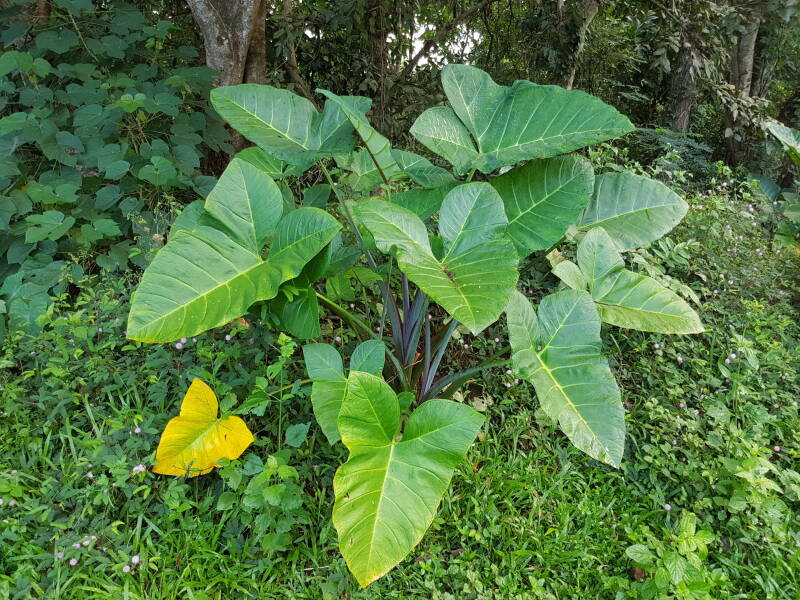
The Arrowleaf Elephant Ear (Xanthosoma sagittifolium) is a striking tropical plant known for its large, arrow-shaped leaves that create a bold, architectural presence. Its lush, vibrant foliage gives it a dramatic, jungle-like appearance, making it a standout in both indoor and outdoor plant displays.
It is a popular choice for growers looking to create a tropical aesthetic, as its large leaves quickly fill space and add height and texture to plant collections.
This plant fits well into both indoor plant collections and homestead environments, particularly in warm climates or bright indoor spaces where its size and presence can be fully appreciated.
🌍 Natural Habitat
Arrowleaf Elephant Ear is native to tropical regions of Central and South America and the Caribbean, where it grows in warm, humid environments with rich, consistently moist soil.
In its natural habitat, it is often found in lowland areas, along riverbanks, or in partially shaded clearings where it receives filtered sunlight and abundant rainfall.
The soil in these environments is nutrient-rich and retains moisture while still allowing excess water to drain away.
These conditions explain why the plant thrives in consistently moist soil, high humidity, and warm temperatures.
Understanding this environment is essential for replicating successful growing conditions.

☀️ Light Requirements
Arrowleaf Elephant Ear thrives in bright, indirect light to partial sun.
- Ideal placement: Bright indoor location near a south- or east-facing window, or partial shade outdoors
- Too much light: Harsh direct sun can scorch leaves, causing browning or fading
- Too little light: Results in slower growth, smaller leaves, and a less full appearance
While it can tolerate some direct sun, filtered light produces the best balance of growth and leaf quality.
Consistent lighting supports large, healthy foliage development.
💧 Watering
Arrowleaf Elephant Ear requires consistent moisture and does not tolerate drying out.
- Water when: The top inch of soil begins to dry
- Watering method: Water thoroughly and keep soil evenly moist
- Reduce watering: Slightly during cooler months, but do not allow soil to dry completely
- Overwatering: Can lead to root rot if soil becomes waterlogged
- Underwatering: Causes drooping leaves, browning edges, and slowed growth
Because of its large leaves and rapid growth, this plant has higher water demands than many houseplants.
Maintaining evenly moist soil is key to keeping foliage lush and healthy.


🌱 Soil & Drainage
This plant requires a rich soil mix that retains moisture while still draining well.
Recommended mix:
- High-quality potting soil (base)
- Compost or organic matter for nutrients
- Perlite or pumice for drainage
- Coco coir or peat moss for moisture retention
The goal is to create a nutrient-dense, airy mix that mimics tropical soil conditions.
Good drainage is still important to prevent water from sitting around the roots.
🌿 Propagation
Arrowleaf Elephant Ear is propagated through division of tubers or offsets.
Steps:
- Remove the plant from its pot or dig it up carefully
- Locate tubers or offsets with visible growth points
- Separate using a clean cut
- Allow cut surfaces to dry briefly
- Replant in fresh soil and water lightly
Propagation is best done during the growing season when the plant can recover quickly.
This method allows you to expand your collection or manage plant size.


🌡 Temperature & Environment
Arrowleaf Elephant Ear prefers temperatures between 65–85°F.
- Humidity: Moderate to high
- Indoor vs outdoor: Can be grown indoors or outdoors in warm climates
- Avoid: Frost, cold drafts, and temperatures below 60°F
High humidity encourages larger leaves and more vigorous growth.
In cooler climates, it may go dormant during winter and regrow in spring.
🌿 Growth Habit
Arrowleaf Elephant Ear grows as a large, upright tropical plant from underground tubers.
- Growth speed: Fast under ideal conditions
- Mature size: 3–6 feet tall (or larger outdoors)
- Growth pattern: Upright with large, spreading leaves
Its leaves can become quite large, creating a bold, layered canopy effect.
With proper care, it develops into a dramatic focal point in any plant collection.

Thank you for exploring The Botanical Index, a growing botanical library dedicated to organizing plant knowledge in one place.
New plant profiles are added regularly as this index continues expanding. Your curiosity and support help this botanical resource continue to grow.
🌿 Follow along on YouTube and Facebook for daily plant content, care guides, and updates as we continue building this botanical library and homestead journey together.
Add comment
Comments